
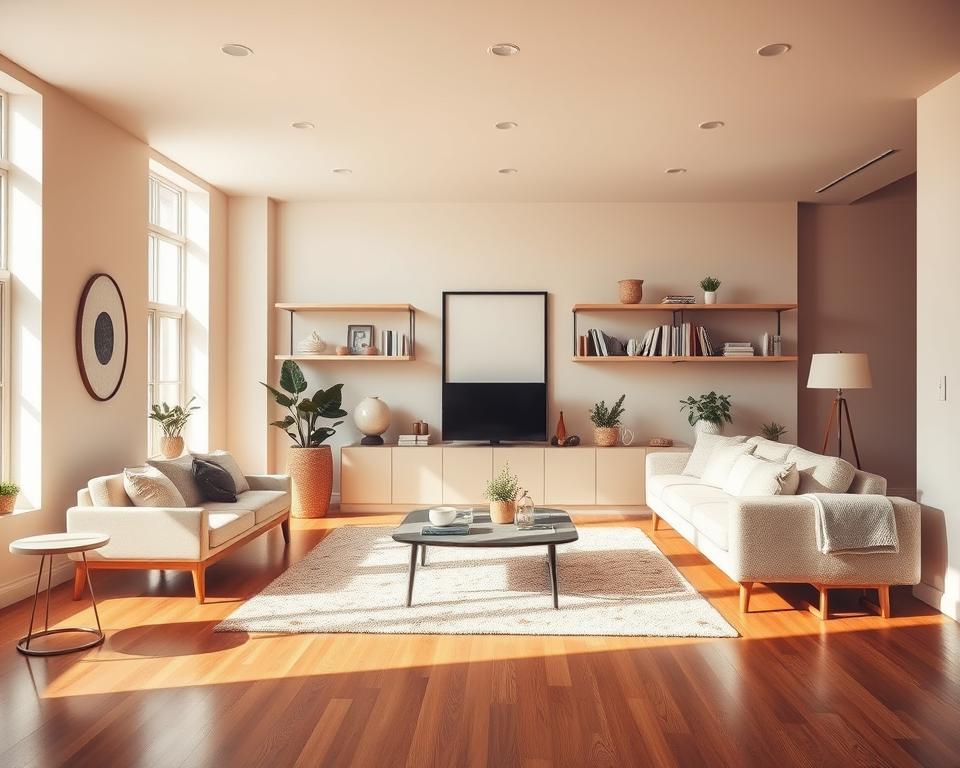
Imagine walking into a room that feels like a breath of fresh air, where everything has its place, and you can focus on what matters. This is the power of spatial harmony and organized environments. When our surroundings are clutter-free and well-structured, it positively impacts our productivity and overall well-being.
A well-designed space can uplift our mood and help us stay focused. By creating an environment that is both functional and aesthetically pleasing, we can improve our daily lives. It’s about creating a space that works for you, not against you.
Key Takeaways
- Organized environments boost productivity.
- Spatial harmony enhances overall well-being.
- A clutter-free space improves focus.
- Well-designed spaces uplift mood.
- Functional environments improve daily life.
The Principles of Organization and Order of Spaces
The way we organize our spaces significantly impacts our daily lives, influencing everything from productivity to mental well-being. A well-organized space is not just aesthetically pleasing; it also enhances our ability to focus and be productive.
Understanding Spatial Harmony and Balance
Spatial harmony and balance are crucial elements in creating an organized and orderly space. Balance refers to the distribution of visual weight within a space, which can be achieved through the careful placement of furniture, colors, and textures. Harmony, on the other hand, involves creating a visually appealing environment through the use of consistent design elements.
To achieve spatial harmony and balance, consider the following:
- Use a consistent color scheme to create a cohesive look.
- Balance large furniture pieces with smaller ones to avoid overwhelming the space.
- Incorporate textures and patterns to add depth and interest.
The Psychology Behind Organized Environments
Organized environments have a profound impact on our mental health and productivity. Cluttered spaces can lead to feelings of overwhelm and anxiety, while organized spaces promote a sense of calm and clarity. The psychology behind this phenomenon is rooted in the way our brains process visual information.
A well-organized environment can:
- Reduce stress and anxiety by minimizing clutter.
- Improve focus and concentration by creating a distraction-free zone.
- Enhance creativity by providing a clean and inspiring workspace.
Benefits of Well-Ordered Spaces
The benefits of well-ordered spaces are multifaceted, ranging from improved functionality to enhanced aesthetic appeal. Some of the key benefits include:
- Increased productivity: A well-organized workspace can significantly boost productivity by streamlining workflows and reducing distractions.
- Better storage solutions: Effective storage solutions are crucial in maintaining an organized space, keeping clutter at bay and ensuring that everything has its designated place.
- Functional flow: Creating a functional flow within a space involves designing a layout that facilitates easy movement and access to different areas, enhancing the overall usability of the space.
By understanding and applying the principles of organization and order, we can create spaces that not only look great but also contribute to our overall well-being and productivity.
Practical Strategies for Different Spaces
Transforming your home into a haven requires more than just a beautiful design; it demands a thoughtful approach to spatial planning. By understanding the unique needs of different areas within your home or office, you can create spaces that are not only aesthetically pleasing but also highly functional.
Living Areas: Creating Functional Flow
Living areas are the heart of any home, serving as spaces for relaxation, entertainment, and family bonding. To create a functional flow in these areas, consider the following:
- Arrange furniture in a way that promotes easy movement and conversation.
- Use multi-functional furniture pieces to reduce clutter and enhance usability.
- Incorporate storage solutions that are both stylish and accessible.
As interior design expert, Francine Farley, once said, “A well-designed home is not just about looking good; it’s about feeling good, too.” This emphasizes the importance of creating a living space that is both beautiful and functional.
Workspaces: Boosting Productivity Through Order
A well-organized workspace is crucial for productivity. Here are some strategies to boost your work efficiency:
- Implement a filing system for your documents, both physical and digital.
- Use ergonomic furniture to enhance comfort and reduce distractions.
- Minimize clutter by regularly decluttering your workspace.
| Workspace Element | Benefit | Tip |
| Ergonomic Chair | Enhances comfort | Adjust to fit your body |
| Minimal Clutter | Reduces distractions | Regularly declutter |
| Filing System | Improves organization | Both physical and digital |
Storage Solutions: Maximizing Available Space
Effective storage is key to maintaining an organized home or office. Consider the following storage solutions:
- Vertical shelving to maximize wall space.
- Under-bed storage for bedrooms.
- Hidden compartments for valuable or sensitive items.
“The key to a well-organized home is not just about having enough storage, but about having the right storage solutions in the right places.”
Professional Organizer
Maintaining Organization Systems
Maintaining your organization systems is just as important as setting them up. Here are some tips:
- Schedule regular decluttering sessions.
- Monitor and adjust your organization systems as needed.
- Encourage all household members to adhere to the systems in place.
By implementing these practical strategies, you can create a more organized, functional, and beautiful living or working space that enhances your overall quality of life.
Conclusion
Implementing organization and order in our daily lives can have a significant impact on our overall well-being. By creating spaces that promote spatial harmony, we can improve our productivity and enhance our quality of life.
A well-organized living or working space is not just aesthetically pleasing; it also plays a crucial role in reducing stress and improving focus. By applying the principles and strategies discussed, individuals can create environments that support their goals and foster a sense of calm.
Embracing organized living is a journey, and it’s essential to be patient and persistent. Start with small changes, and gradually work your way up to creating a more organized, productive you. By doing so, you’ll be able to reap the benefits of a well-ordered space, enjoying improved productivity and a greater sense of spatial harmony.
FAQ
What is the importance of organizing my living space?
Organizing your living space is crucial as it can significantly impact your daily life, improving productivity, and enhancing your overall well-being. A well-organized space promotes a sense of calm and focus, allowing you to navigate through your daily tasks with ease.
How can I achieve spatial harmony and balance in my home or workspace?
Achieving spatial harmony and balance involves creating a well-designed space that promotes a sense of calm and focus. This can be done by implementing a thoughtful layout, using a mix of textures and colors, and ensuring that the space is clutter-free. By doing so, you can create an environment that is both functional and aesthetically pleasing.
What are the benefits of having a well-ordered workspace?
A well-ordered workspace can boost your productivity, help you stay focused, and reduce stress. By maintaining a clutter-free and organized workspace, you can work more efficiently, meet deadlines, and achieve your goals. Moreover, a well-organized workspace can also enhance your professional image and make a positive impression on clients and colleagues.
How can I maintain my organization systems over time?
Maintaining your organization systems requires commitment and consistency. Start by creating habits such as regular tidying, putting things back in their designated place, and scheduling regular maintenance sessions. You can also use tools like calendars, reminders, and storage solutions to help you stay on track. By doing so, you can ensure that your space remains organized and clutter-free.
What are some practical strategies for maximizing storage space?
Maximizing storage space involves using a combination of storage solutions such as shelves, cabinets, and drawers. You can also utilize vertical space by installing wall-mounted shelves or storage units. Additionally, consider using multi-functional furniture pieces that have built-in storage, such as ottomans or storage beds. By implementing these strategies, you can create a more efficient and clutter-free space.
How can I create a functional flow in my living areas?
Creating a functional flow in your living areas involves designing a layout that promotes easy movement and navigation. Start by identifying the different zones within your living space, such as a seating area or a reading nook. Then, arrange your furniture in a way that creates a clear path between these zones, ensuring that the space feels open and inviting. By doing so, you can create a more functional and comfortable living space.